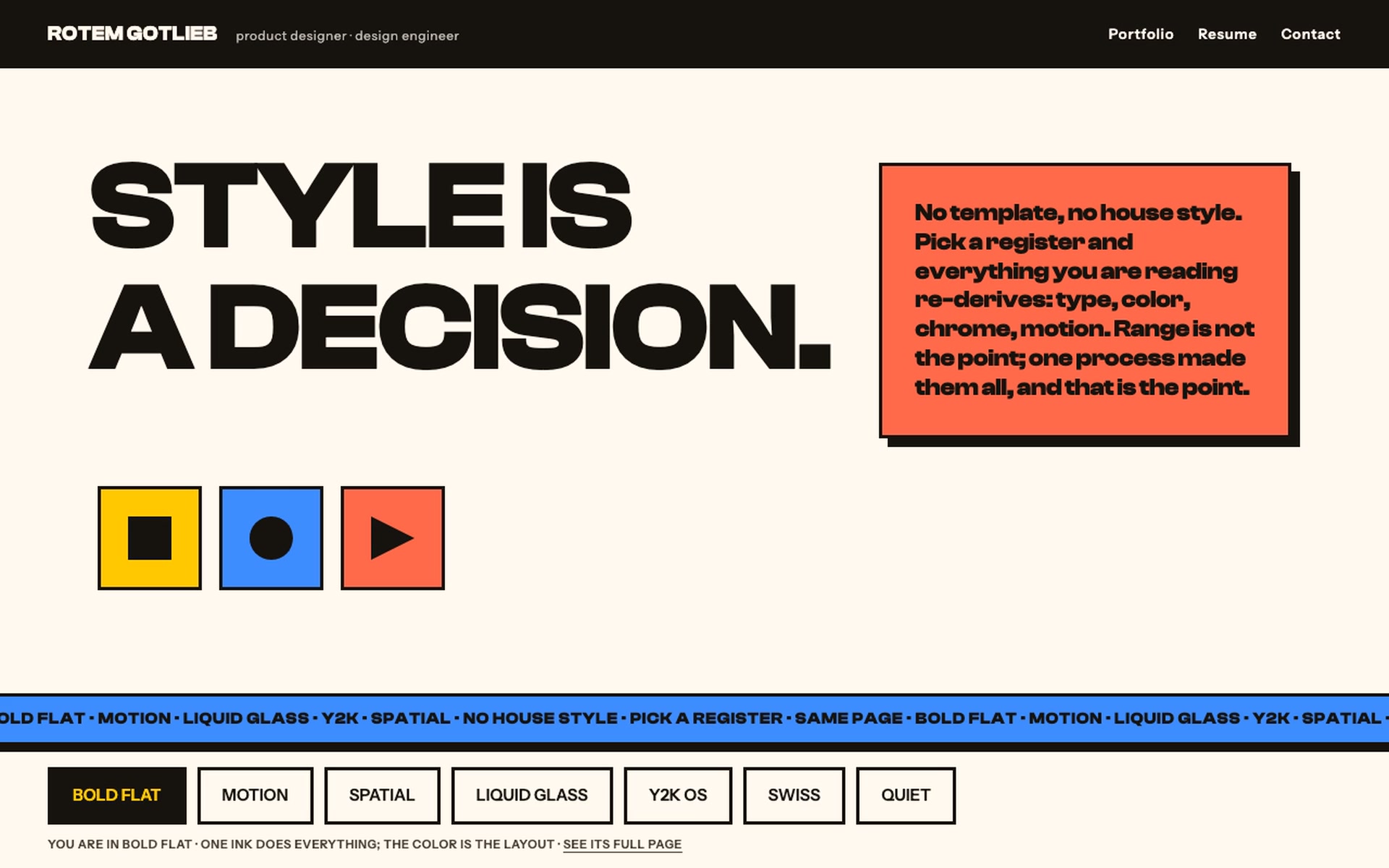
One page becomes bold flat, liquid glass, Y2K, spatial.
Each register is its own design system, not a theme of another. Before any pixel I wrote down the cliche that register would attract, then the structural rule that refuses it, and dated the list before the pixels it governs. Refusing first is slower than designing first and editing after.
Two facts about it are checkable in ten seconds: one HTML file, zero JavaScript libraries.
A register is derived, not picked.
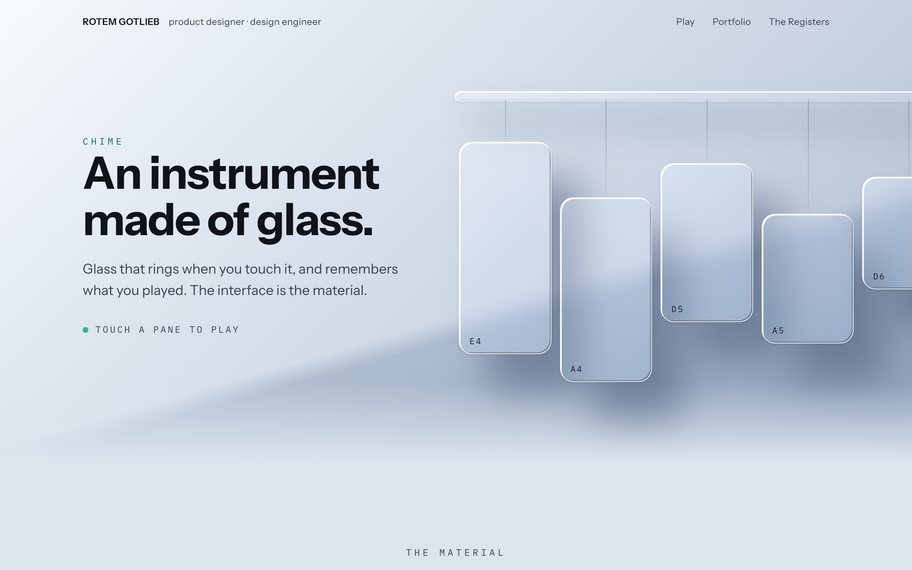
Liquid glass attracts panes floating over nothing, so in that register every pane sits on an opaque backplate.
Every change here is a substitution in the same slot.
The switcher is rebuilt in every register, not recolored once.
One component survives every register: the switcher itself. It is never themed. In bold flat it is a row of stamped blocks inside an ink border.
A switcher that only changes color is a theme toggle, and a theme toggle is exactly what this page must not be.
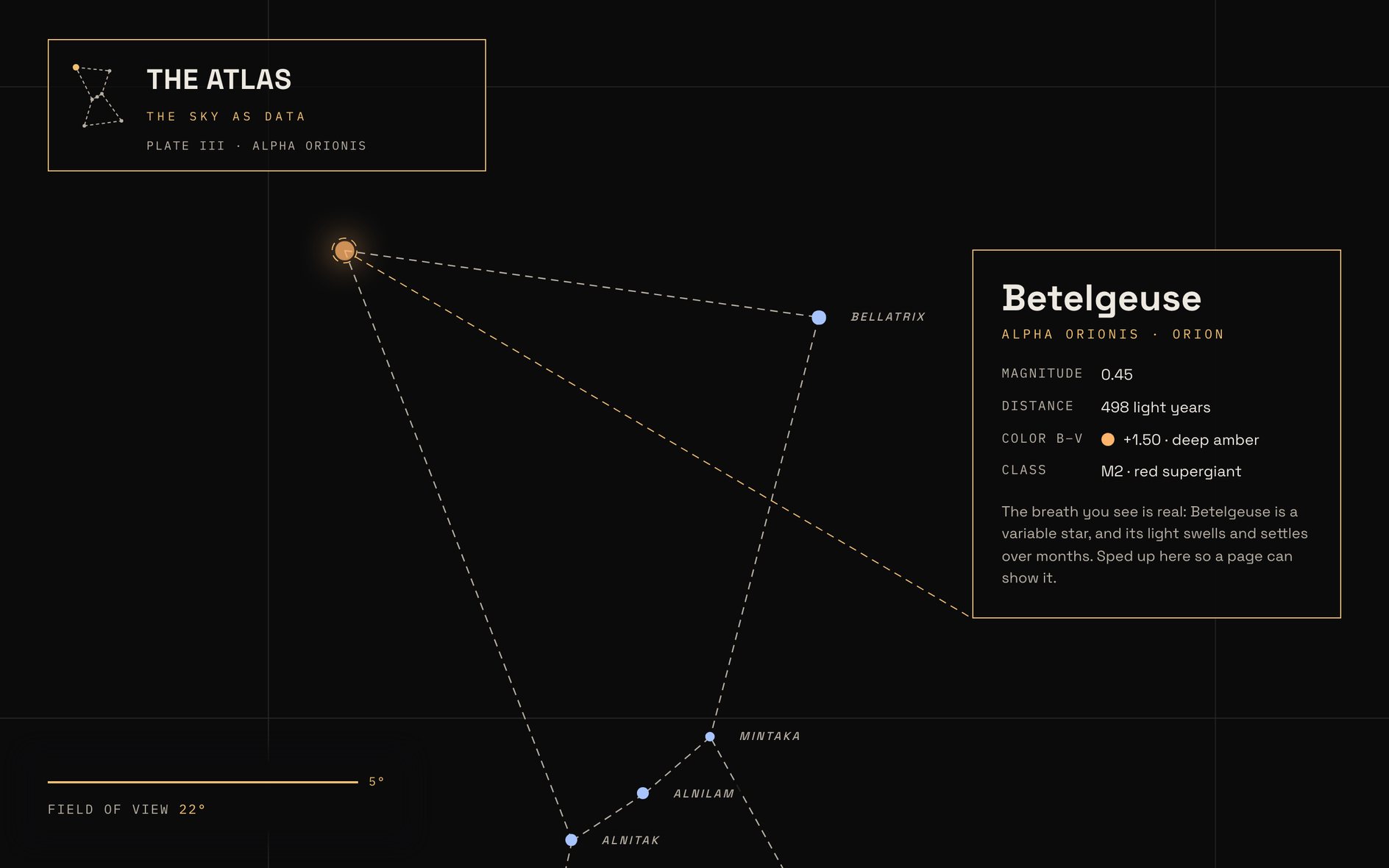
Spatial is a corridor you move through.
I killed six directions and printed the reason.
The reason for each is printed on the live page rather than filed away. Killing your own output and publishing why is the part a generative system does not do.
The corridor as the whole site: published genre. The OS-desktop container: derived from a specimen tile. A neutral eighth chrome: it would out-shout the seven.
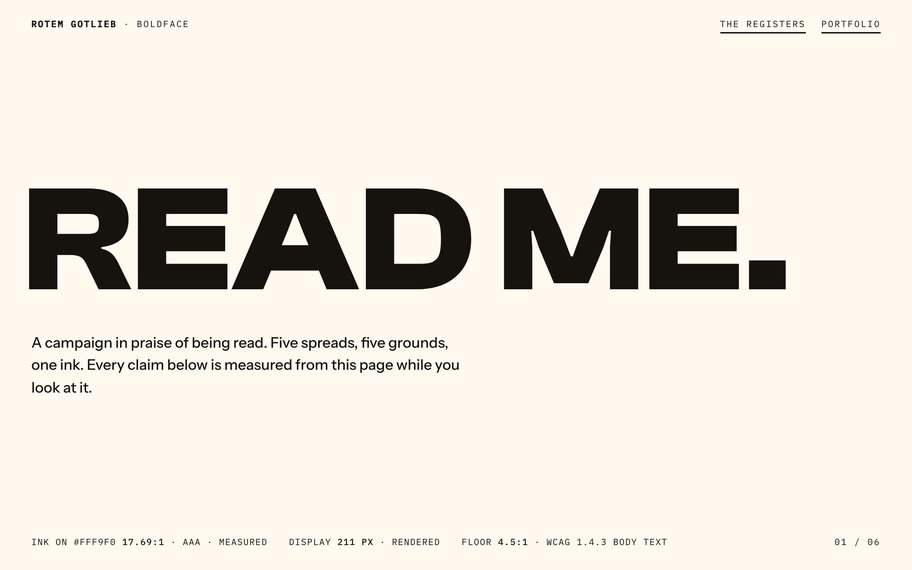
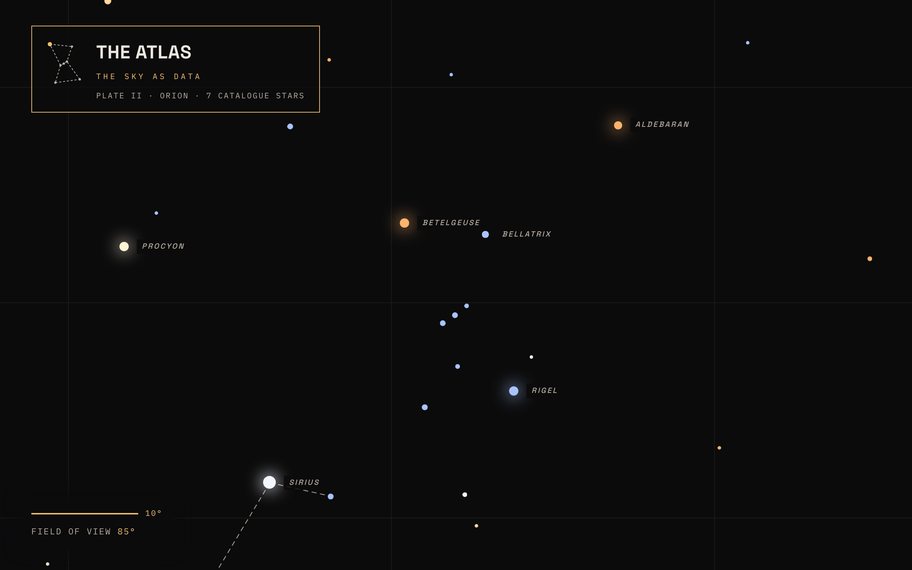
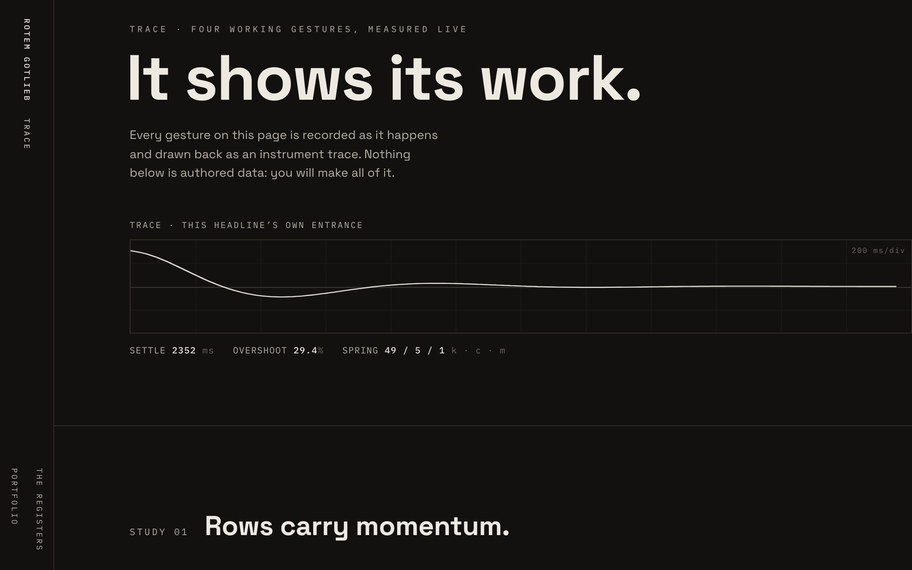
Four registers taken further, each at full length.
Each is a complete page written in its own register, set in that register's own type. They are the same argument at length: a register is a system, not a skin.
What it cost, and what I would change.
The expensive part was not the designs. It was the refusal list. Writing it is slower than designing first and editing after, and it is the only reason these read as separate designs.
What I would change: the hero above is a recording of the artifact, so the two can drift, and they did.
A capture that stands in for a live product needs a check that fails when the product moves.
The hero and the artifact drifted once, and that still needs its own check.
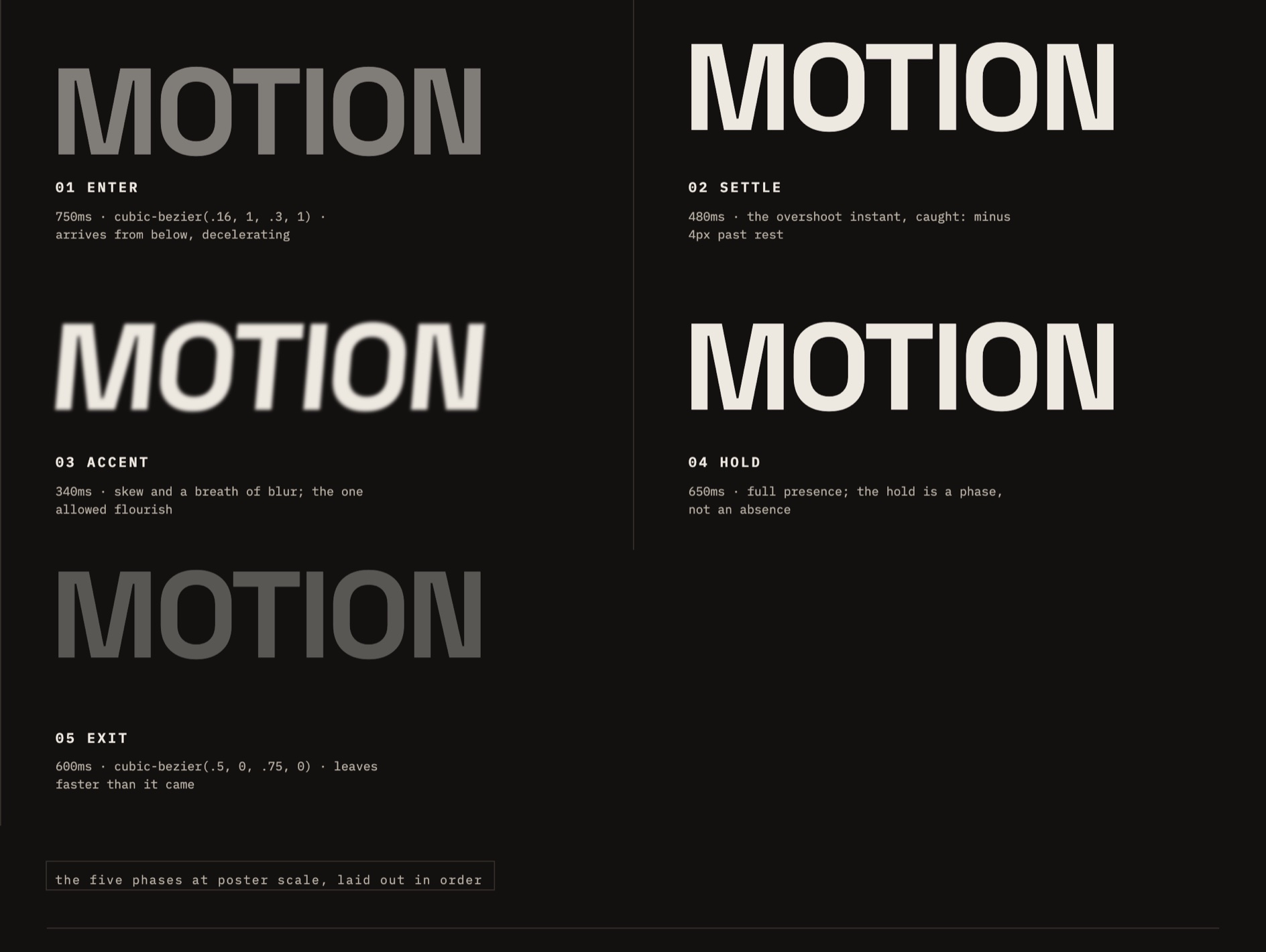
Five phases, each with its measured number and its reason.